
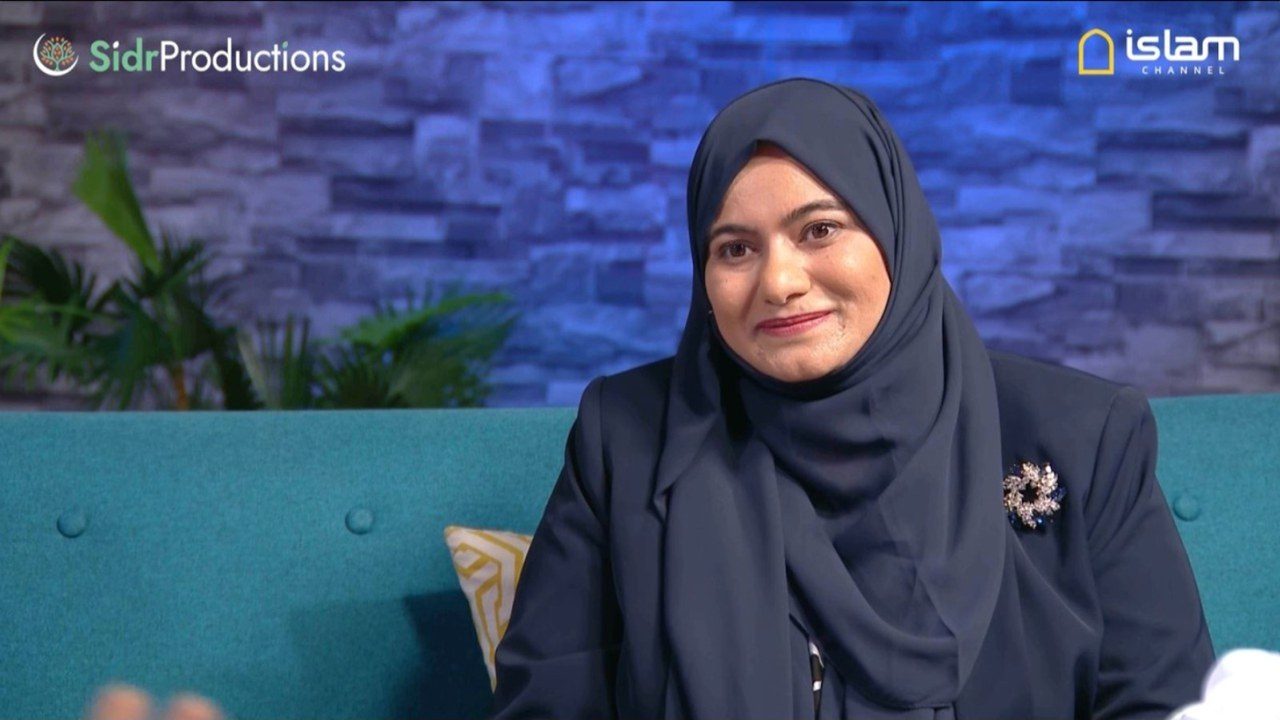
Islam Channel’s morning programme Salaam Britain welcomed our co-founder Dr Nousheen Zakaria to the studio, introducing her as someone “making Islamic learning fun and accessible for children around the world” and noting she had travelled from the UAE to be there. Over twenty-five minutes the presenters went through the books and apps on the table in front of them: My Quran Journey, Hifz Tracker and Abdullah & Fatima.
The interview was originally broadcast on Salaam Britain and published on our YouTube channel on 19 December 2025. Watch it on YouTube.
Asked how it all began, Dr Nousheen described herself first as a tech entrepreneur. She holds a PhD in strategic human resource management, founded a technology company in the UK, and after moving to Pakistan set up one of Karachi’s first co-working spaces. Then her eldest son reached school age, and she could not find the school she wanted for him: one that was Islamic but also preparing children for the future. So she started one, Sidr School, two years before the interview.
The school wanted its children to build a real connection with the Qur’an, not only memorise it. Dr Nousheen looked for an interactive Qur’an book or curriculum that would appeal to children and found nothing she could use. So the first book was written: word-by-word and verse-by-verse meanings, an infographic to help children picture each surah, and a short, current lesson for every one.
The book also showed her how hard publishing is, with the capital and the editing it takes. It was her husband and co-founder, she said (adding that she did not want to take the credit from him), who asked how long it would take to cover the whole Qur’an. The answer was ages, so they turned the book into an app instead. The whole Qur’an went in, with word-by-word and verse-by-verse meanings and lessons, and it was kept free for every child. The presenters highlighted that it is ad-free, works on web and mobile, and carries translations in fifteen languages. The team is now building eighteen kinds of activities, puzzles and games to make Qur’an learning more engaging still.
Picking up the twelve-book Abdullah & Fatima series, the presenters asked about the thinking behind it. Dr Nousheen pointed to falling literacy among children in the UK, the US and South Africa, and to research showing children now meet stories on screens and in games as well as in books. So the series is built as a whole: books rooted in values such as adab, shukr and amanah, with audiobooks, animations and five games that prompt children to read as they play.
She gave one example. In a game, a child helps her mother collect coins, and then her father calls: it is time for salah. The game stops the child in the middle and shows her what matters. And the names? Abdullah and Fatima are her own children, she laughed, so there were no royalties to pay, and she has their signatures on the contracts.
Islamic children’s books rarely reach mainstream bookshops, she explained, which leaves Islamic publishing fragmented. In the UK, she said, around 12.9% of children in nurseries and primary schools come from South Asian backgrounds, but fewer than 1.9% of books published reflect those backgrounds. And where Muslim characters do appear, they are too often written as marginalised or as migrants. Children deserve better representation in the books and curriculum they use.
Hifz Tracker began at her school, which, like almost every hifz programme, tracked memorisation on paper. As a parent she was handed a sheet to sign each day (and, she admitted, a tech founder does not keep a pen at home). As a school founder she saw how hard it was to know who was doing well, who was struggling, and how to keep parents informed. The app puts every student’s progress in one place, shows it in a colourful, habit-building way, and is adding a leaderboard. It is free to download, with a small fee when a school connects to it, and it was shaped with input from imams and scholars.
Dr Nousheen added that the apps are not meant to replace physical books or a parent’s time, and parents can see what their children are doing in them. Whatever profit the products make goes back into producing more books, curriculum and apps.
Asked what she hopes for the next generation of British Muslim children, she was clear: she wants them to be “unapologetic Muslims”, rooted in their faith and values, proud of them, and confident enough to explain them when they meet people of other faiths and backgrounds. That is what the books, Alif Kids and the apps are for.
In the last minute the presenters asked her to speak directly to the women watching. A few years ago, she said, she looked at her life and felt she had worked for this world but not enough for the next. She prayed for direction. The first book she ever published was a Qur’an book for children, even though her PhD supervisors had never managed to get a paper out of her. It all starts with intention, she said, and every morning she asks Allah to purify hers and to use her, and not replace her, in this work.
Our thanks to Islam Channel and the Salaam Britain team for having us.
Published 21 December 2025 in Press. Questions? Get in touch.
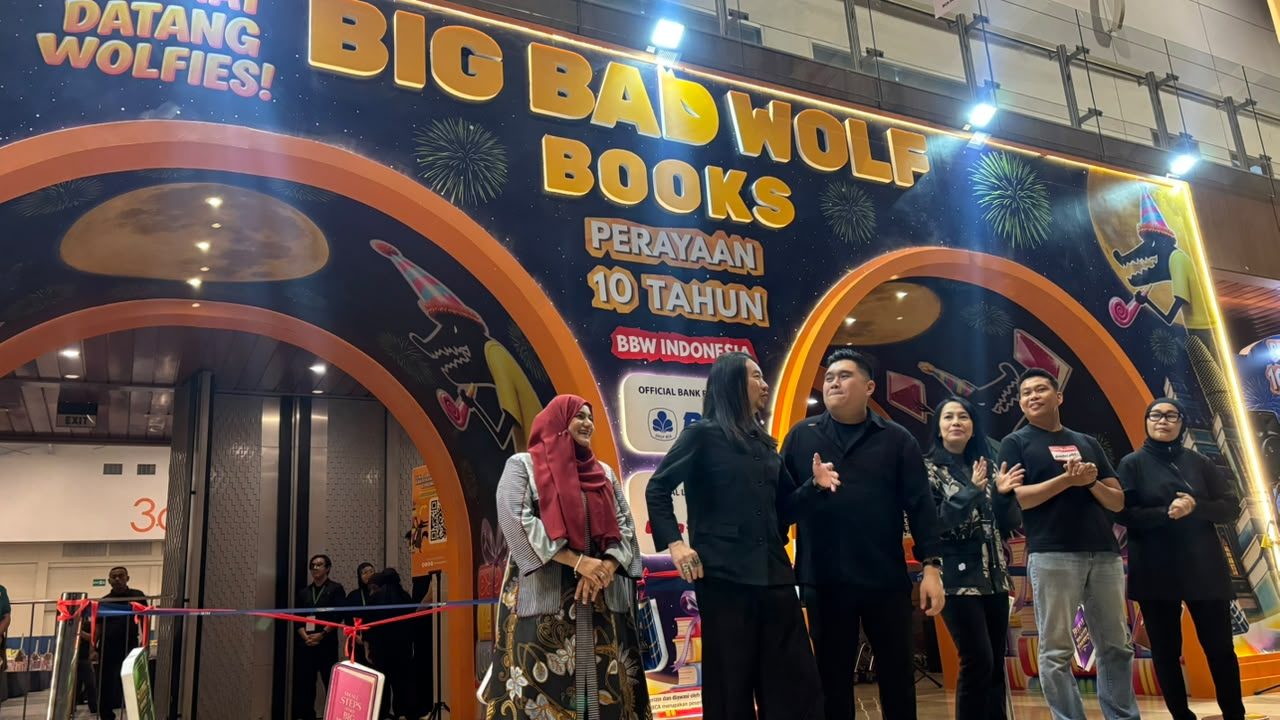
Our co-founder Dr Nousheen Zakaria opened BBW Jakarta 2026 at ICE BSD City alongside Big Bad Wolf founder Andrew Yap and Country Director Marthius Wandi Budianto. Our Little Ummah collection is this year’s special collaboration.
Read more →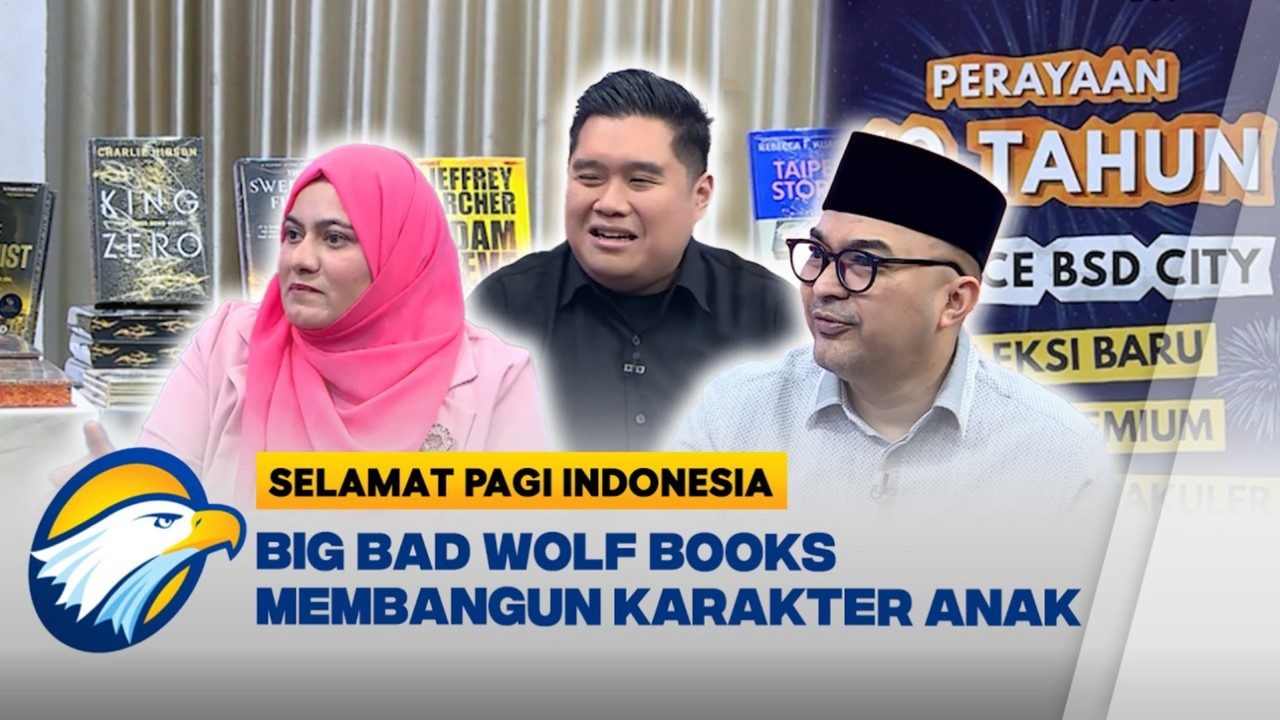
Dr Nousheen Zakaria joined Big Bad Wolf Indonesia and Ustadz David Chalik on Metro TV to talk about the Little Ummah collection: more than 120 of our English-language storybooks, coming to ICE BSD City from 28 October to 1 November.
Read more →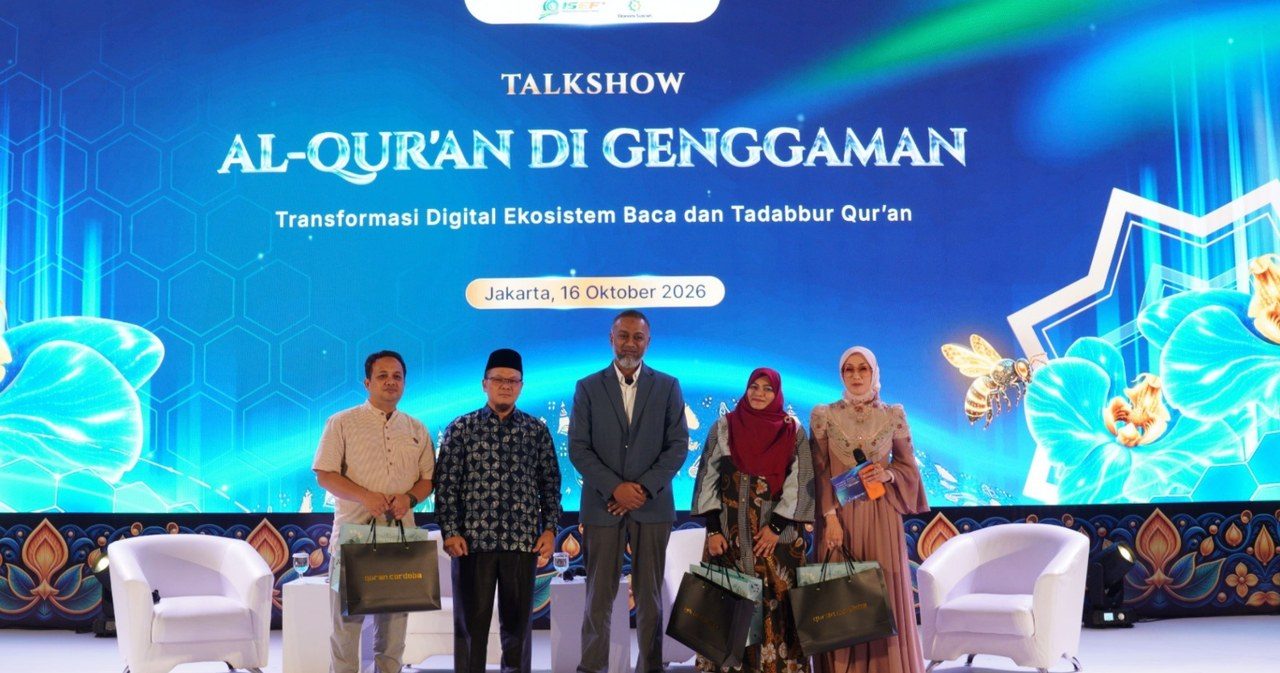
On the Bank Indonesia stage at the Indonesia Sharia Economic Festival, our partners Quran Cordoba took their thematic mushaf into the digital world, starting in English and Indonesian, with fifteen languages planned within a year.
Read more →Thirty minutes, your student numbers, an honest answer about whether we are a fit. Onboarding, training and data migration are included — there is nothing to sign to find out.