

Raising children with strong Islamic values is a responsibility and blessing for every Muslim parent. The foundation of a child’s character is built in the home, and the daily routines and habits they develop from an early age play a crucial role in shaping their faith and moral compass. Instilling Islamic values doesn’t require grand gestures; instead, it thrives in the small, consistent actions woven into everyday life. By incorporating Islamic teachings into daily habits, parents can nurture children who not only understand their faith but live it in their thoughts, actions, and interactions with others.
In this article, we will explore practical ways to embed Islamic values into your child’s daily routine, fostering a lifelong connection with Allah and guiding them to become compassionate, ethical, and God-conscious individuals.
Children learn by observing. The most effective way to instill Islamic values is by modeling those values in your own behavior. Your actions, words, and reactions serve as a powerful example for your children.
1.1 Practice What You Preach
If you want your child to develop qualities like honesty, patience, gratitude, and compassion, demonstrate these in your daily interactions. Show kindness in your speech, maintain humility in your achievements, and display patience in challenging situations.
Example:
When you face a stressful situation, instead of reacting with frustration, say, “Alhamdulillah for everything. Let’s find a solution calmly.” This teaches children how to handle adversity with faith.
1.2 Include Children in Acts of Worship
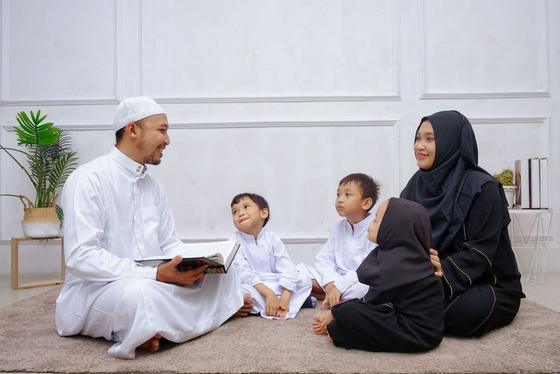
Let your children see you performing Salah, reading the Quran, making Dua, and giving charity. Invite them to join you, explaining the significance of each act. When they witness your commitment to worship, they are more likely to adopt these habits themselves.
Everyday routines provide countless opportunities to instill Islamic values. By turning simple activities into moments of learning and reflection, you can help children internalize their faith naturally.
2.1 Begin and End the Day with Remembrance of Allah
Start the day by teaching children to say “Bismillah” (In the name of Allah) when they wake up and “Alhamdulillah” (All praise is due to Allah) for the gift of life. Similarly, end the day with bedtime Duas, thanking Allah for the day’s blessings and seeking His protection.
Example:
Before bed, recite Surah Al-Ikhlas, Surah Al-Falaq, and Surah An-Nas with your child, explaining how these surahs protect us from harm.
2.2 Teach Duas for Everyday Activities
Integrate Duas into everyday activities such as eating, traveling, entering and leaving the home, or wearing new clothes. These simple prayers help children develop constant awareness of Allah’s presence in their lives.
Example:
Before eating, encourage them to say, “Bismillah,” and after finishing, “Alhamdulillah.” Explain that we thank Allah for the food He has provided and remember those who are less fortunate.
Consistency is key in developing a strong spiritual routine. Encourage children to perform small, consistent acts of worship, reinforcing their connection with Allah.
3.1 Introduce Salah Gradually
Start introducing Salah (prayer) as early as possible. For young children, it can begin with simple imitation—joining you on the prayer mat, learning the positions, and eventually memorizing the words and actions.
Prophetic Guidance:
The Prophet Muhammad (SAW) said, “Instruct your children to pray when they are seven years old…” (Abu Dawood)
3.2 Make Quran Recitation a Daily Habit
Encourage children to read or listen to the Quran daily, even if it’s just a few verses. Consistent exposure helps them develop a love for the Quran and strengthens their connection to Allah’s words.
Example:
Set aside 5-10 minutes each day for family Quran reading. Discuss the meanings of simple verses to help children understand the relevance of the Quran in their lives.
Gratitude is a central theme in Islam, and teaching children to be thankful helps them develop a positive outlook on life.
4.1 Practice Gratitude Daily
Encourage children to express gratitude for both big and small blessings. Make it a habit to reflect on the things you are grateful for as a family, such as health, food, family, and friends.
Quranic Reminder:
“If you are grateful, I will surely increase you [in favor]…” (Surah Ibrahim 14:7)
Example:
During dinner, ask your children to name three things they are grateful for that day. This simple practice helps them recognize Allah’s blessings in everyday life.
4.2 Teach Contentment with What They Have
In a world of consumerism and constant comparison, teaching children to be content with what they have is crucial. Emphasize that true happiness comes from appreciating what Allah has given rather than constantly wanting more.
Example:
When your child desires a new toy or gadget, explain the concept of Qana’ah (contentment) and how the Prophet Muhammad (SAW) lived a simple, content life despite his ability to acquire more.
Islam emphasizes compassion and generosity towards others. By encouraging acts of kindness and charity, you can nurture empathy and a sense of responsibility in your children.
5.1 Encourage Acts of Kindness
Teach children to perform small acts of kindness daily, such as helping a sibling, sharing with friends, or assisting a neighbor. Explain how these simple actions are highly valued in Islam.
Prophetic Example:
The Prophet Muhammad (SAW) said, “The most beloved of people to Allah are those who bring the most benefit to others.” (Al-Mu’jam Al-Awsat)
Example:
Involve your children in helping with household chores or visiting sick relatives, explaining that these actions are part of showing compassion.
5.2 Introduce Charity as a Regular Practice
Teach children about Sadaqah (voluntary charity) and the importance of giving to those in need. Encourage them to set aside a portion of their allowance for charity or participate in community service activities.
Example:
Create a “Charity Jar” where children can contribute coins regularly. When the jar is full, let them choose where to donate the money, helping them understand the impact of their generosity.
Stories are powerful tools for teaching values. Share stories from the Quran, the life of the Prophet Muhammad (SAW), and the Sahabah (companions) to illustrate key Islamic principles.
6.1 Share Stories of the Prophets
The stories of Prophets like Ibrahim (AS), Musa (AS), and Yusuf (AS) are rich with lessons on faith, patience, forgiveness, and trust in Allah.
Example:
Tell the story of Prophet Yusuf (AS) and how he forgave his brothers despite their betrayal. Use this to teach the importance of forgiveness and trusting Allah’s plan.
6.2 Discuss Real-Life Examples of Islamic Values
Use everyday situations to highlight Islamic values. For instance, if your child witnesses a friend being bullied, discuss how Islam teaches us to stand up for justice and protect the vulnerable.
Islam teaches the importance of self-reflection and accountability. Encourage children to regularly evaluate their actions and seek ways to improve.
7.1 Daily Check-Ins and Reflection
At the end of each day, create a routine where your child reflects on their actions. Ask them questions like, “Did you help someone today?” or “Did you say Alhamdulillah when you received something?”
Example:
Create a simple reflection journal where children can write down one good deed they did each day and how they felt about it.
7.2 Teach the Importance of Tawbah (Repentance)
Help children understand that making mistakes is a part of life, but seeking forgiveness from Allah and striving to do better is what matters.
Prophetic Guidance:
The Prophet Muhammad (SAW) said, “All the children of Adam are sinners, and the best of sinners are those who repent.” (Sunan Ibn Majah)
In the digital age, technology can be a powerful tool to support Islamic upbringing. Utilize apps, games, and online resources to reinforce Islamic values in an engaging way.
8.1 Islamic Apps and Games
Apps like My Quran Journey, Deen Quest, and Kids Read provide interactive ways to teach children about Islamic principles, Quranic stories, and daily Duas.
Example:
Set a time each day for your child to use an Islamic learning app, turning screen time into a productive and spiritually enriching activity.
8.2 Educational Videos and Series
Introduce children to Islamic cartoons and educational YouTube series that teach Islamic values through storytelling and engaging visuals.
Example:
Watch a series like “What the Prophet Muhammad (SAW) Taught Me” together as a family, and discuss the lessons afterward.
Creating a Life Rooted in Islamic Values
Instilling Islamic values in children is a continuous journey that requires patience, consistency, and intentional effort. By incorporating these values into daily habits, you create a nurturing environment where faith is not just a set of rules but a way of life. Through modeling good behavior, fostering gratitude and compassion, encouraging acts of worship, and using modern tools like Islamic apps and stories, you can guide your children to become ethical, kind, and God-conscious individuals.
Remember, the goal is not perfection but progress. Small, consistent actions will, over time, build a strong foundation of faith and character that will guide your children throughout their lives. As parents, your efforts in nurturing Islamic values will be a source of ongoing reward, benefiting not just your children but the generations to come
Published 6 June 2024 in Parenting. Questions? Get in touch.
Parenting in today’s rapidly evolving world is both a challenge and an opportunity. For Muslim parents, the…
Read more →
Raising children in today’s world can be both a rewarding and challenging journey. With countless influences from…
Read more →
In today’s fast-paced and often stressful world, emotional well-being has become a key focus for people seeking…
Read more →Thirty minutes, your student numbers, an honest answer about whether we are a fit. Onboarding, training and data migration are included — there is nothing to sign to find out.