

Raising children is not simply about providing food, clothing, and education. In Islam, it is a sacred amanah (trust)—a responsibility to nurture young hearts toward Allah.
Allah reminds us:
“O you who have believed, protect yourselves and your families from a Fire whose fuel is people and stones…” (Qur’an 66:6)
At the heart of this responsibility is taqwa—awareness of Allah, love for Him, and fear of displeasing Him. Taqwa acts as a shield, guiding believers through temptations and trials. When children are raised with taqwa, they grow into adults who make decisions rooted in faith, character, and responsibility.
But how do parents instil taqwa daily in their children—especially in a world full of distractions, peer pressure, and mixed values?
This blog explores practical, everyday steps parents can take for raising children with taqwa, weaving spirituality into family life without making it feel forced or heavy.
Many children (and even adults) mistake taqwa for simple fear of Allah. While fear is part of it, taqwa is broader. It is:
The Prophet Muhammad ﷺ explained taqwa by pointing to his chest three times, saying: “Taqwa is here.” (Muslim)
This means taqwa is a state of the heart—an inner compass. Parents, therefore, must nurture both knowledge and love of Allah so that taqwa grows naturally.
While many parents understand that raising children with taqwa is an important part of upbringing, some may not realize how important it is to do so from a fairly early age:
Start each day by reminding children of Allah’s blessings.
Why it matters: These routines show that every day begins and ends with Allah, embedding taqwa in their rhythm of life.
Children imitate what they see more than what they’re told. If parents treat salah as an optional task, kids will too.
Tip: Turn salah into a family event—standing shoulder to shoulder builds love for worship.
Stories are one of the most powerful tools for instilling taqwa.
Activity Idea: Weekly story night with reflection: “What lesson can we use in our life?”
Children thrive on encouragement, which can making raising children with taqwa more effective. Therefore, praise them when they:
Say: “MashaAllah, Allah loves when you do that!”
Why it matters: Kids link good deeds with Allah’s pleasure, not just parental approval.
Gratitude (shukr) is a core aspect of taqwa.
Result: Kids grow mindful of blessings, preventing entitlement.
Children often encounter questions about what’s allowed and not. Teach with clarity, but avoid making Islam seem overly restrictive.
Example: “Allah made pork haram because He loves us and wants to keep us healthy.”
The Qur’an is the ultimate source of taqwa. Families that recite and reflect together anchor themselves spiritually.
Tip: Keep sessions short (5–10 minutes) so kids associate Qur’an with love, not pressure.
Children learn reliance on Allah when dua becomes a family habit.
Benefit: Kids feel Allah is close, hearing their needs.
Help children think about their actions in light of Allah’s presence.
Why it matters: Kids link taqwa with conscious choices, not blind obedience.
Taqwa grows when the environment supports it.
Outcome: Children feel Islam is normal, not a weekend activity.
Highlight achievements in deen with the same excitement as academic wins.
Lesson: Kids see faith as something to celebrate, not just endure.
Serving others is a practical way to teach taqwa.
Impact: Children connect faith to kindness and responsibility.
When facing challenges—financial, health, or family—show reliance on Allah.
Lesson: Kids learn that taqwa means trusting Allah through ups and downs.
Overly harsh discipline may push children away from faith. Spiritually strong families balance rules with compassion.
Result: Children associate taqwa with love and safety, not fear alone.
Consistency builds taqwa more than bursts of strictness.
Raising children with taqwa can be a journey that parents may find both rewarding and challenging at the same time:
“My kids get bored during Islamic lessons.”
“My teen resists Islamic rules.”
“I feel I’m not knowledgeable enough.”
“We’re too busy.”
Q: At what age should I start teaching taqwa?
A: From the earliest years. Even toddlers can learn simple phrases like Bismillah and Alhamdulillah.
Q: What if I started late?
A: It’s never too late. Teens may need deeper discussions, but seeds can be planted at any age.
Q: How do I avoid making Islam feel heavy?
A: Balance teaching with joy—storytelling, celebrations, and love.
Raising children with taqwa isn’t about one big lesson—it’s about daily, small, consistent actions that build awareness of Allah. When parents make dua together, pray together, tell stories, and celebrate Islamic milestones, they plant seeds that grow into lifelong iman.
Remember: taqwa is a journey, not perfection. What children see, feel, and experience at home becomes their framework for faith. By modelling taqwa daily—with gratitude, consistency, and mercy—you gift your children not only a strong identity in this dunya but a pathway to Jannah in the akhirah.
Published 7 October 2025 in Parenting. Questions? Get in touch.

Every parent wants the best for their children. We strive to provide good education, health, and comfort. But in the…
Read more →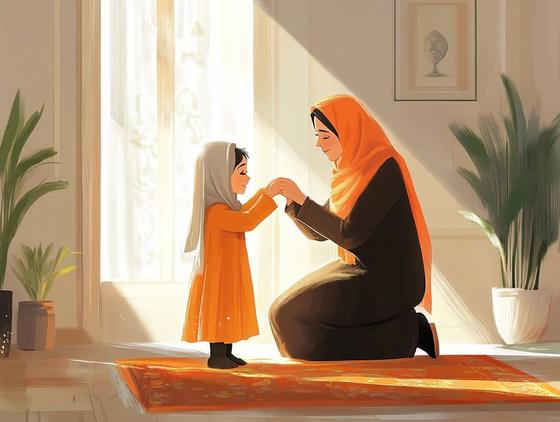
There’s no questioning the well-researched fact that children absorb lessons faster in their early years than at any…
Read more →
In today’s fast-paced world, children don’t just need academic skills—they need emotional intelligence (EQ). Emotional…
Read more →Thirty minutes, your student numbers, an honest answer about whether we are a fit. Onboarding, training and data migration are included — there is nothing to sign to find out.